Quarter Horse Price: How Much Does a Quarter Horse Cost?
How much does a Quarter Horse cost? Real US price ranges by age, training and registration, what drives the price, yearly costs and what to check before you buy.
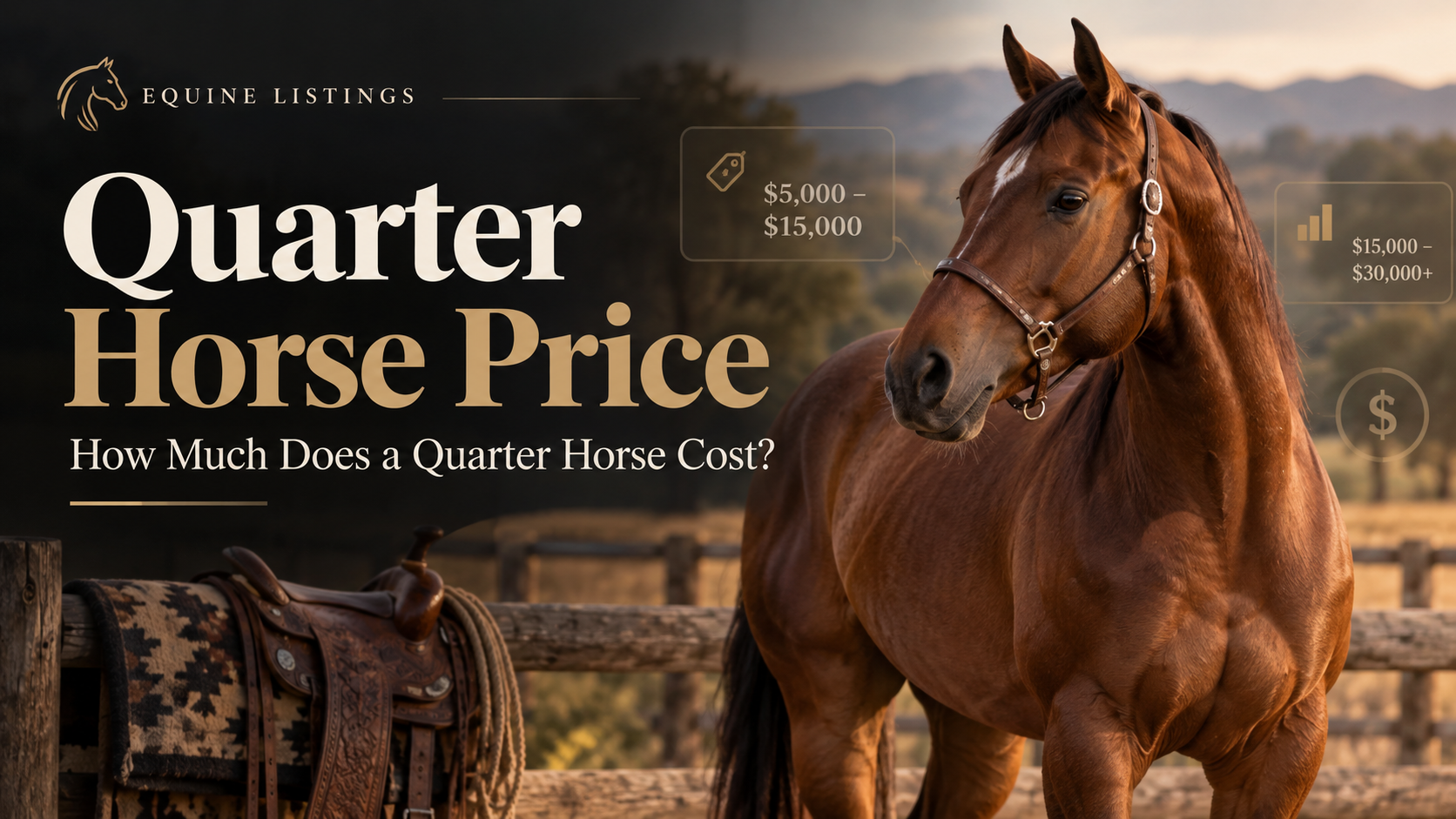
How much does a Quarter Horse cost? In the United States a Quarter Horse can cost anywhere from about $3,000 for an older, unregistered riding horse to $20,000 or more for a registered, well-trained one, and six figures for an elite racing or performance prospect. There is no official average Quarter Horse price. The breed is used for everything from backyard trail riding to ranch work, rodeo and racing, so price follows age, training, papers and bloodlines rather than the breed name.
Recent evidence gives useful anchors. In October 2026 the nine Quarter Horses on Equine Listings that stated a price asked $3,000 to $22,000, with a median of $6,000. At the other end of the market, state-bred yearlings at the August 2025 Ruidoso sale sold for a median of $18,000, and the top one brought $400,000.
Key Takeaways
Papers and training move the price most. The four registered Quarter Horses advertised on Equine Listings in October 2026 asked $4,500 to $22,000 (median $15,250). The five unregistered ones asked $3,000 to $11,000 (median $3,950).
Age matters. Three unregistered riding horses aged 14 to 16 were advertised at $3,000 to $3,950, while a registered 7-year-old asked $22,000.
Sale-ring yearlings are a different market. At night one of the 2025 Ruidoso New Mexico Bred sale, yearlings averaged $29,776 with a median of $18,000. At the 2025 Los Alamitos Equine Sale, yearlings averaged about $48,000.
The purchase price is the smaller number over time. A 2023 survey of 1,231 US owners put basic care at about $8,600 a year for a backyard horse and $11,800 for a recreational horse.
Pay for a pre-purchase exam. It is the cheapest way to avoid an expensive mistake, whatever the price.
How Much Does a Quarter Horse Cost?
The honest answer is a range, not a number. The American Quarter Horse Association (AQHA) has registered more than six million horses, a milestone it announced in 2021, and they are bred and trained for very different jobs. A quiet 15-year-old trail horse and a yearling by a leading racing sire are both Quarter Horses, and their prices are tens or hundreds of thousands of dollars apart.
Typical Quarter Horse price ranges
Older, unregistered riding horses: three unregistered horses aged 14 to 16 (a gelding and two mares) were advertised on Equine Listings in October 2026 at $3,000, $3,600 and $3,950. A 13-year-old gelding with an all-around record asked $11,000.
Young and green horses: a registered 1-year-old colt asked $4,500, a registered 3-year-old all-around gelding $10,500, and a 5-year-old roping gelding without papers $6,000.
Registered, trained riding horses: a registered 5-year-old gelding listed with beginner, kid-safe and lesson experience asked $20,000, and a registered 7-year-old all-around palomino gelding asked $22,000.
Sale-ring yearlings: at night one of the Ruidoso New Mexico Bred Quarter Horse Yearling Sale on August 8, 2025, 55 of 69 yearlings sold for a gross of $1,637,700, an average of $29,776 and a median of $18,000.
Racing and performance prospects: the same Ruidoso session topped out at $400,000, and the 2025 Los Alamitos Equine Sale was topped by a $730,000 colt. At that sale 142 yearlings sold for an average of about $48,000.
What Affects a Quarter Horse's Price?
Training and discipline
Training is usually the biggest single driver. A horse that has only been halter-broke is priced as a prospect. One that has been ridden for years, loads, ties and stands for the farrier is priced as a finished horse. Discipline matters as well: horses with proven records in reining, cutting, roping, barrel racing or working cow horse command more because the buyer is paying for a result. Among the ads reviewed, price rose with documented riding experience and papers together.
Age
Quarter Horses often stay useful riding horses into their teens, which is why a sound, quiet 14-year-old can be good value for a newer rider. Prices usually fall as a horse ages and the years of hard work left shrink. A very young horse is a prospect: its price rests on pedigree and conformation, because there is no riding record yet.
Registration and papers
To compete in AQHA-approved shows and earn points, a horse generally has to be AQHA-registered, and a foal can only be registered if its parents are. Papers also let a buyer check pedigree and breeding. An unregistered horse can be an excellent riding horse, but its value rests on the horse itself. If a seller says a horse is registered, ask to see the registration certificate and confirm the transfer of ownership with AQHA.
Bloodlines and show record
Pedigree matters most in the sale ring. At the 2025 Los Alamitos sale the $730,000 top lot was a colt by Favorite Cartel, a sire that led the sale with 33 yearlings bringing a combined $3,484,500. For a riding horse, a competition record and a proven sire or dam count for more than a famous name on the papers.
Temperament and soundness
A calm, sound horse with a clean vet check is worth more than a flashy one with a question mark. Soundness problems, vices and a poor record with loading, clipping or shoeing all lower the price, which is why a pre-purchase exam matters more than any price comparison.
Gender
Geldings are the most common riding horses, and eight of the eleven Quarter Horses advertised on Equine Listings in October 2026 were geldings. Mares and stallions carry breeding value, so their price depends on bloodlines and production record as well as on how they ride.
Why Quarter Horse Prices Vary So Much
Because the breed is so large, one label covers a very wide spread of horses. Sale-ring yearlings are priced on pedigree and racing or performance potential, while most riding horses sold privately are priced on age, training and temperament. When you compare prices, compare like with like: age, training, papers and purpose.
Costs of Owning a Quarter Horse
Buying the horse is the first expense, not the biggest one. These figures come from published surveys and extension guidance rather than from our own ads:
Basic annual care per horse: about $8,600 for a backyard or pastured horse, $11,800 for a recreational horse and $26,000 for a competition horse, according to the 2023 Equine Lifetime of Care Study of 1,231 US owners, as reported by The Horse.
Boarding: among owners who pay for boarding, the same study found an average of $6,311 a year for recreational horses and $9,324 for competition horses.
Veterinary and farrier care: University of Kentucky extension specialist Bob Coleman puts basic veterinary and farrier care at around $2,500 a year in Kentucky, with farrier visits of about $150 each at seven a year as an example.
Hay: small square bales cost $7 to $12 each in Kentucky in summer 2026, and a 1,000-pound horse eats roughly 20 to 25 pounds of hay a day.
A health care reserve: veterinarians surveyed for the same study suggested setting aside about $6,500 a year for health care.
What to Check Before Buying a Quarter Horse
Whatever the price, the same checks apply. Our pre-purchase exam guide covers the vet check in detail, and our first-time buyer guide covers the whole process.
Ask for the registration certificate, and confirm the transfer of ownership with AQHA if the horse is registered.
See the horse caught, groomed, tacked up and ridden, and ride it yourself more than once and in more than one setting.
Ask how it loads, clips, ties and stands for the farrier.
Request vet and Coggins records, and have your own veterinarian do a pre-purchase exam.
Put the sale in writing. Our guide to what an equine bill of sale must include explains each clause.
Check the price against comparable horses, not the cheapest one you find. For a wider view of prices, see how much a horse costs in the USA.
Finding Quarter Horses for Sale
You can browse Quarter Horses for sale on Equine Listings and filter by age, gender, discipline, price and state. If you are selling one, see how to sell a horse and place your ad. For another breed's price picture, see our Friesian horse price guide.
Frequently Asked Questions About Quarter Horse Prices
In the United States a Quarter Horse can cost from about $3,000 for an older, unregistered riding horse to $20,000 or more for a registered, trained one, and six figures for an elite racing or performance prospect. There is no official average price. In October 2026 the Quarter Horses on Equine Listings that stated a price asked $3,000 to $22,000, with a median of $6,000.
The Bottom Line on Quarter Horse Prices
A Quarter Horse costs what its age, training, papers and bloodlines are worth to a buyer, which is why prices run from a few thousand dollars to hundreds of thousands. For a riding horse, expect roughly $3,000 to $22,000 on the evidence here, with registered and well-trained horses at the top of that range. Compare like with like, budget for the years of care that follow the purchase, and always have a veterinarian examine the horse first.
Looking for your Quarter Horse?
Browse Quarter Horses for sale on Equine Listings and compare horses by age, training, price and location.
Sources
American Quarter Horse Association, AQHA Registry Hits Milestone: 6 Million Registered Horses
Stallion E Search, $400,000 Sale Topper Pushes Ruidoso NM Bred Night One Numbers Up (August 2025)
Stallion E Search, $730,000 Sale Topper Highlights Another Record Los Alamitos Equine Sale (2025)
Karen Hopper Usher, The Horse, How Much Does It Cost to Own a Horse?, citing the Synchrony/CareCredit 2023 Equine Lifetime of Care Study and Bob Coleman, PhD, University of Kentucky