
Friesian Horse Price: How Much Does a Friesian Cost?
How much does a Friesian horse cost? See real US price ranges by age, training and registration, why Friesians cost more, and what to check before you buy.
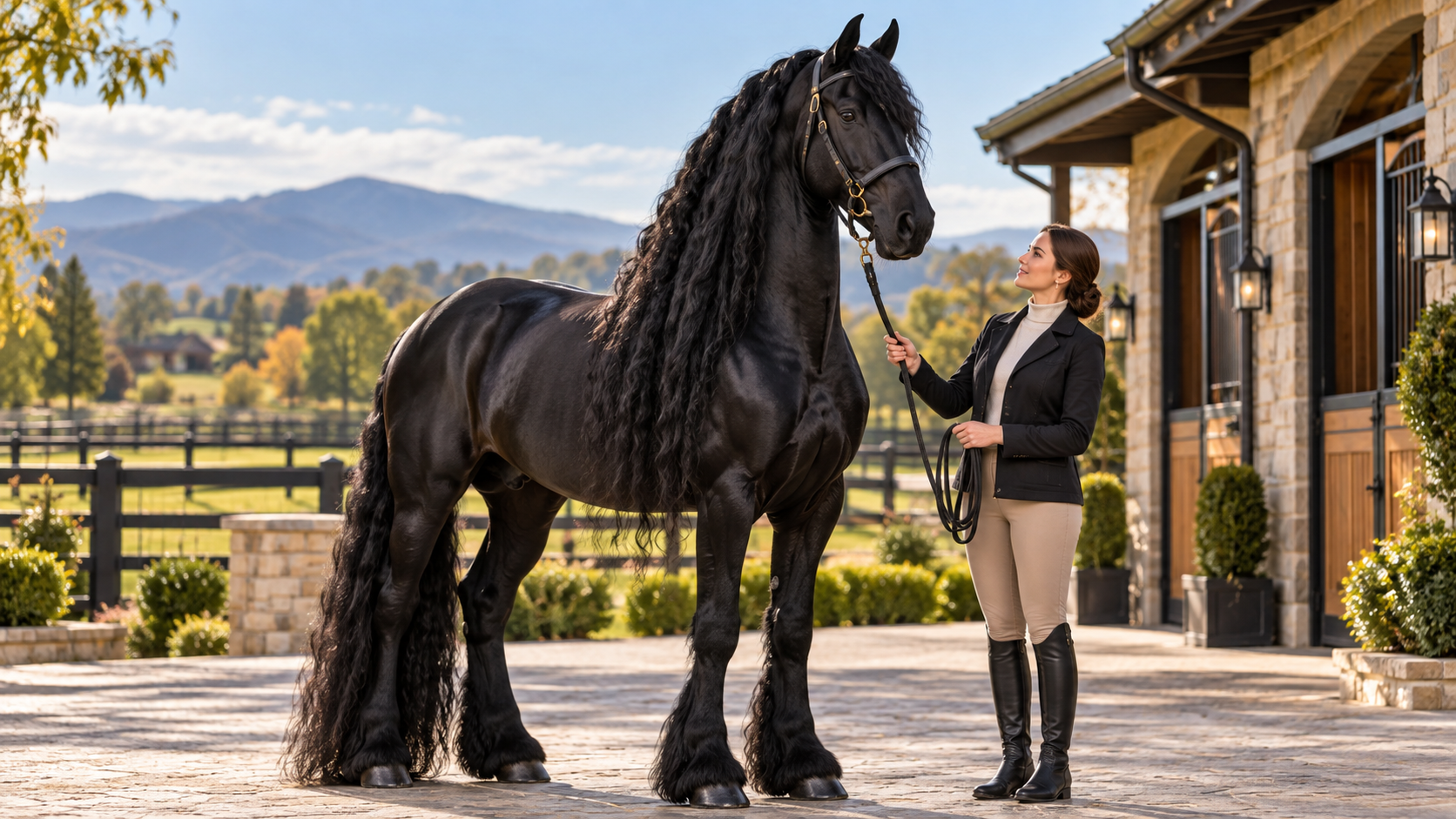
How much does a Friesian horse cost? In the United States, a Friesian can cost anything from a few thousand dollars for a Friesian cross or an unregistered horse to $60,000 or more for a registered, well-trained purebred. There is no official average Friesian horse price. As the Friesian Horse Association of North America (FHANA) puts it, prices vary with age, sex, inspection status and level of training.
Recent evidence gives useful anchors. At a 2021 Indiana Friesian auction, registered purebreds sold for about $8,100 to $34,000, and in October 2026 adult purebred riding geldings were commonly advertised at $15,000 to $60,000. Registration, inspection results, training and pedigree explain most of the difference.
Key Takeaways
There is no single Friesian horse price. Published sale and listing data runs from about $1,200 for some crosses to $60,000 for top riding horses, with approved stallion prospects higher still.
Papers matter most. A purebred registered in the KFPS studbook (through FHANA in North America) usually costs far more than a Friesian cross or a horse without papers.
Inspection results and training add value. Star, Crown and Model predicates, sport scores and solid riding or driving training all raise the price.
Friesians are relatively scarce. FHANA counts about 8,000 registered Friesians in North America, out of more than 45,000 worldwide.
Budget for breed-specific checks. Genetic tests, a pre-purchase exam by a vet who knows Friesians, and import costs for horses from the Netherlands can all add to the total.
How Much Does a Friesian Horse Cost?
Most Friesians change hands privately, so the best evidence comes from published auction results and from asking prices in current listings. An asking price is what a seller hopes to get; a sale price is what a buyer actually paid. Both are useful, but neither gives a national average, so treat the ranges below as a guide.
Typical Friesian price ranges
Friesian crosses and driving horses: at the 2021 Michiana Friesian Sale in Shipshewana, Indiana, the general consignments, many of them Friesian crosses sold as driving horses, brought about $1,200 to $20,000, with a median near $6,000. Crosses advertised online in October 2026 were mostly priced between $4,000 and $20,000.
Registered purebreds at auction: the featured lots at the same 2021 sale, mostly registered purebreds with full pedigrees, sold for about $8,100 to $34,000, with a median near $15,000. A proven breeding stallion topped them at $34,000.
Foals and young stock: foals and yearlings were commonly advertised at about $8,500 to $12,500 in October 2026. In the Netherlands, the KFPS reported an average of €7,886 per foal at its first online foal auction in 2022.
Adult purebred riding horses: registered Friesian geldings aged roughly 4 to 17 were commonly advertised at $15,000 to $60,000 in October 2026, with a typical asking price near $30,000.
Approved stallions and top prospects: at the 2018 Friesian Horse Auction in the Netherlands, an approved five-year-old stallion sold for €92,000, while the 34 horses sold averaged about €14,000.
What Affects a Friesian's Price?
Registration and papers
The Friesian studbook is kept by the KFPS in the Netherlands, founded in 1879, and FHANA is its sole North American representative. Only offspring of a main studbook mare and a KFPS-approved stallion enter the main studbook; others are recorded in the B-books. Registered horses must be black, with no white other than a small star. A horse with full KFPS papers usually costs considerably more than a cross, a horse registered with another Friesian registry, or a horse sold without papers.
Inspection results
At KFPS inspections (keuringen), horses are judged 60% on movement and 40% on conformation. According to FHANA, only the best 25% to 30% earn Star (Ster) status. Mares can go on to earn Crown (Kroon) and Model predicates, and horses with competition results can earn Sport predicates. Each predicate is a recognized sign of quality, and sellers price it in.
Age
Young Friesians are bought on potential and cost less, but FHANA notes that many are not worked heavily until after age 4, so a buyer waits longer for a riding horse. Mature horses with proven training typically command the highest prices.
Training and discipline
Friesians are used for dressage, driving, carriage work, trail riding and more. A horse with solid dressage training or that drives safely, single or in a pair, is worth considerably more than a green one. Competition scores can also earn Sport predicates, which add further value.
Pedigree and breeding potential
There are only about 100 approved Friesian stallions worldwide, roughly a quarter of them in North America. A colt from top lines may be marketed as a stallion prospect, but FHANA cautions that the chance of a colt being approved for breeding is relatively small, so most colts are later gelded and priced as riding or driving horses.
Sex
Geldings are often the practical choice for riding and driving. Mares with good predicates and pedigrees carry breeding value, and approved or approvable stallions are priced very differently from either.
Location and import
Many US Friesians are imported from the Netherlands. Importing adds flight and quarantine costs, and under USDA rules, mares and stallions over 731 days old must also complete contagious equine metritis (CEM) testing after quarantine, which geldings do not. That extra time and cost is reflected in the price of imported horses.
Why Friesians Cost More Than Many Breeds
Supply is part of the answer: FHANA counts about 8,000 registered Friesians in North America. Breeding is also costly. A 2019 cost breakdown in FHANA's magazine put the cost of producing one registered US foal, including stud fee, vet work, registration and a year of the mare's upkeep, at about $7,138. One US stallion station lists 2025 stud fees of $1,500 to $1,600 for its approved stallions. A breeder has to recover those costs before a foal is sold, and buyers pay extra for the breed's look, movement and registered pedigrees.
Purebred vs. Friesian Cross Prices
Friesian crosses, such as Friesian × Standardbred driving horses or crosses with Gypsy, Arabian or Andalusian horses, are often far more affordable than purebreds. The 2021 Indiana sale shows the gap: a median near $6,000 for the general consignments, many of them crosses, against about $15,000 for the registered purebreds. A cross can be an excellent riding or driving horse, but it cannot enter the KFPS studbook, so pay for the horse in front of you, not for its Friesian name.
Costs of Owning a Friesian
The purchase price is only the start. Boarding, feed, hoof care, routine veterinary care and insurance cost much the same as for other horses, as covered in our guide to how much a horse costs. A few costs are specific to Friesians:
Size and feed: FHANA gives an average height of 15.2 to 16 hands and a weight of 1,300 pounds or more, so a Friesian eats more hay than a smaller riding horse.
Feathered legs: the long hair on the lower legs needs regular care, and FHANA advises keeping pastures dry to help prevent infections of the feathered pasterns.
Hoof care: FHANA notes that farriers should account for the breed's high knee action and tendency toward lax tendons.
Insurance: mortality premiums are typically a percentage of the horse's insured value, so a higher purchase price means a higher premium.
Registry fees: FHANA charges $100 to transfer ownership of a registered horse and $200 to register an imported horse, plus annual membership.
What to Check Before Buying a Friesian
The usual steps in our guide on how to buy a horse apply to Friesians, with a few additions:
Confirm the papers. Ask for the registration papers and inspection results, check that the description matches the horse, and confirm how ownership will be transferred with FHANA.
Ask for genetic test results. FHANA advises testing breeding horses for hydrocephalus and dwarfism, two inherited conditions in the breed, and never breeding two carriers together.
Use a vet who knows Friesians. Research and veterinary reports point to breed predispositions including megaesophagus, aortic rupture, insect bite hypersensitivity (sweet itch) and chronic skin problems on the pasterns. FHANA also notes that Friesians can be sensitive to sedatives and tend to hide pain.
Check a mare's breeding history. A Dutch study found retained placenta in 54% of Friesian mares after foaling, far higher than in most breeds.
Plan any import carefully. Budget for transport, USDA quarantine and, for mares and stallions, CEM testing, and confirm who pays for each step.
Ride or drive the horse yourself. A beautiful horse is not automatically the right one; make sure its training and temperament suit your experience.
Finding Friesian Horses for Sale
Compare horses on the details that drive value: registration, inspection results, age, training and health records, not just price. When you're ready, browse horses for sale on Equine Listings and ask sellers for papers, test results and videos of the horse being ridden or driven.
Frequently Asked Questions About Friesian Horse Prices
In the US, a Friesian cross or unregistered horse can cost a few thousand dollars, while registered purebreds sold for about $8,100 to $34,000 at a 2021 Indiana auction, and adult purebred riding horses were commonly advertised at $15,000 to $60,000 in 2026. Registration, inspection results, training and pedigree drive the price.
The Bottom Line on Friesian Horse Prices
A Friesian's price depends on what you are buying: a cross or an unregistered horse can be affordable, while a registered, inspected and well-trained purebred costs much more. Decide what you need, check the papers and health history carefully, and budget for ongoing care and any import costs before you commit.
Looking for your Friesian?
Browse horses for sale across the USA on Equine Listings and compare horses by breed, age, training and location.
Sources
Friesian Horse Association of North America, Frequently Asked Questions
Friesian Horse Association of North America, The Friesian Registry
Friesian Horse Association of North America, Member fees
Friesian Horse Association of North America, Friesian 101 (2024)
The Friesian (FHANA), The Foal is the Goal: The Cost of Breeding a Friesian Foal (2019)
Bright Star Auctions, Michiana Friesian Sale results, February 2021
Horses.nl, Friesian Horse Auction results (2018)
USDA APHIS, Import horses from the Netherlands
Sevinga et al., Retained placenta in Friesian mares, University of Groningen
dvm360, The trouble with Friesians
University of Kentucky, Fenway Foundation research on Friesian health